Engineering notes.
Write ups from real builds, including the systems on this site. What the architecture was, what broke, and what we would do again. Each note is written by the engineers who did the work.
- Entries
- 16
- Latest
- Written by
- Baraqix Engineering
- Feed
- RSS
Notes · every note is in the field
One constellation per note, placed by the model
Hover a row to light its passages
Featured build · NOTE/16
AI agents found a MONAI Label zero day. Read your upload paths
Amazon says autonomous agents found a path traversal flaw in an open source medical imaging application, MONAI Label, and turned it into a root shell. The chain looks like a typical RAG stack, and the fixes are ordinary backend hygiene.
- Published
- Read
- 5 min
- Filed
- security, agents, rag, backend
Earlier notes.
NOTE/15
AutoRAGBench says agents build RAG well. The scorer did the work
A 19 November 2026 arXiv benchmark reports that the best agent built RAG systems averaged 56.1 against 44.4 for a composite human baseline. Every task came with the evaluation harness most teams still have to write.
rag, agents, evaluation, retrieval5 min read
NOTE/14
Agent swarms show prompt injection in tool output is not solved
A Google DeepMind paper posted on 9 November 2026 used swarms of cooperating attacker agents to make frontier and open weights models follow instructions planted in tool output. Here is what the numbers say and how we would design around them.
prompt injection, agents, security, red teaming5 min read
NOTE/13
PostgreSQL fixed 52 flaws. Your NL2SQL role is the attack surface
The 12 November PostgreSQL update fixes 52 vulnerabilities, many reachable by a low privilege role, plus GIN and pg_trgm GiST index corruption that could make queries miss rows. Here is what that means for NL2SQL, agents and RAG on Postgres.
postgresql, security, nl2sql, rag5 min read
NOTE/12
Patching an MCP gateway does not clean up what was already written
On 11 November 2026, AWS published bulletins for an SSRF and an authorization flaw in MCP Gateway Registry. Each bulletin says the upgrade leaves data written before it in place, and that changes how teams should patch agent infrastructure.
mcp, security, agents, ssrf5 min read
NOTE/11
An SGLang flaw let an attacker into NEAR AI through inference
NEAR AI says a remote code execution flaw in SGLang, the open source inference engine running on its servers, exposed account details for about 100 users, data from 18 legacy agents and two customers' API keys. Here is what that means for teams that self host models.
security, inference, agents, incident5 min read
NOTE/10
A support agent leaked another customer's data on 28 of 100 runs
Arize showed a web page steering a support agent into reading another customer's record while it refused every blunt exfiltration attempt. Why refusal tests miss this, and how we would scope agent tools in code and in PostgreSQL.
agents, prompt injection, security, postgresql5 min read
NOTE/09
Coding agents install deprecated MCP servers from memory
Glow Labs found coding agents installing archived MCP reference servers from training data, including one with an unpatched remote code execution bug. Here is why model memory is not a package index, and the controls we would add.
mcp, agents, supply chain, security5 min read
NOTE/08
ElevenLabs says voice wins long conversations. Read the latency data instead
A vendor study published on 2 November says voice agents beat chat on long conversations, but its duration buckets are shaky and its latency finding is the part a team shipping voice agents should act on.
voice, latency, evaluation5 min read
NOTE/07
Planted Markdown files made two coding agents rewrite their own config
Forever Security found a planted AGENTS.md in a customer's Downloads folder. The lesson for teams shipping agents is not the folder, it is that text an agent read could change what the agent was allowed to do.
agents, security, prompt injection, mcp5 min read
NOTE/06
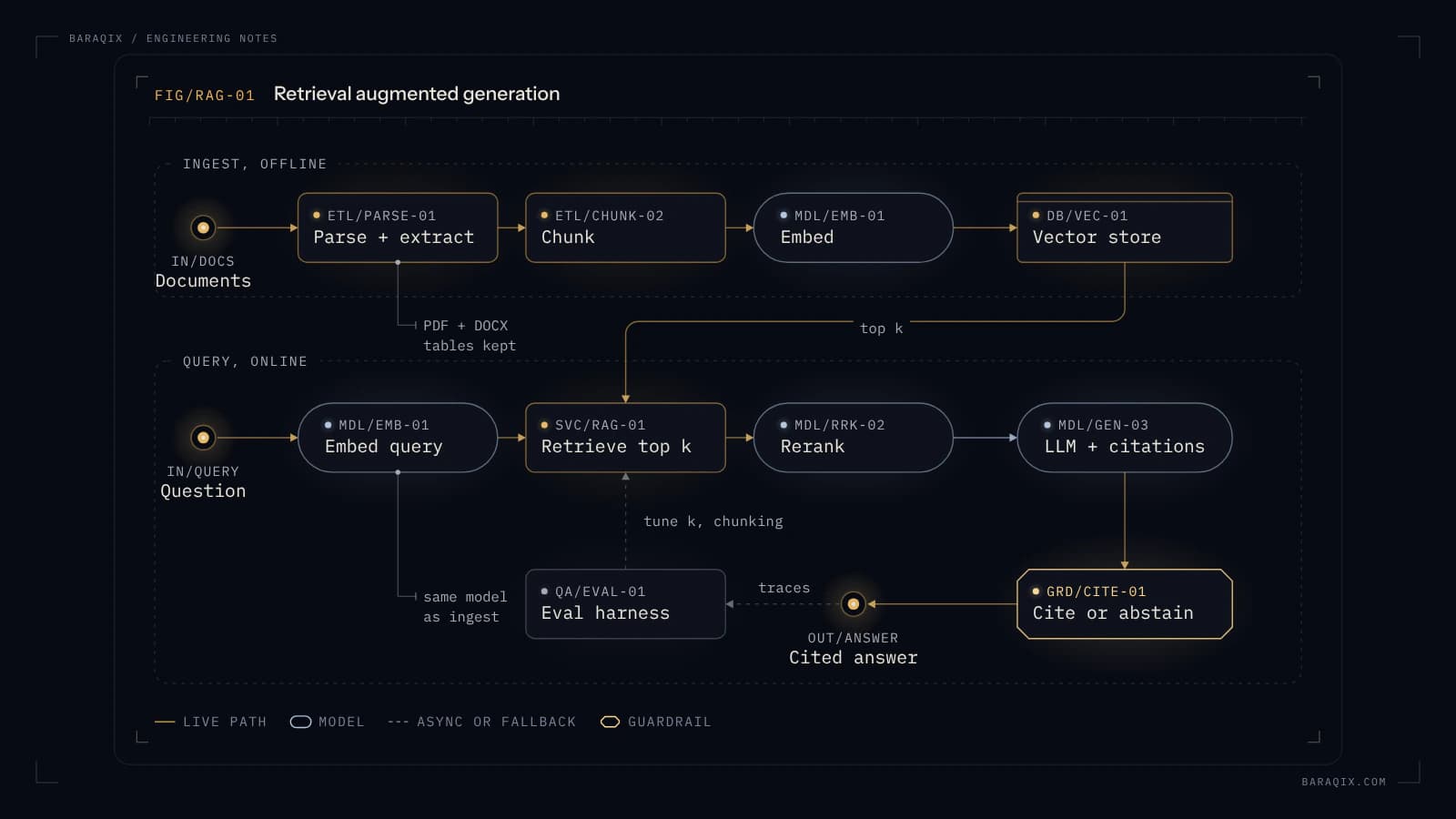
How do you test retrieval quality before building a RAG application?
How we test retrieval before any model writes an answer: a labelled question set from real questions, hit rate at k, chunking and threshold tuning, and off topic controls. Grounded in the 187 question audit of the search on this site.
rag, search9 min read
NOTE/05
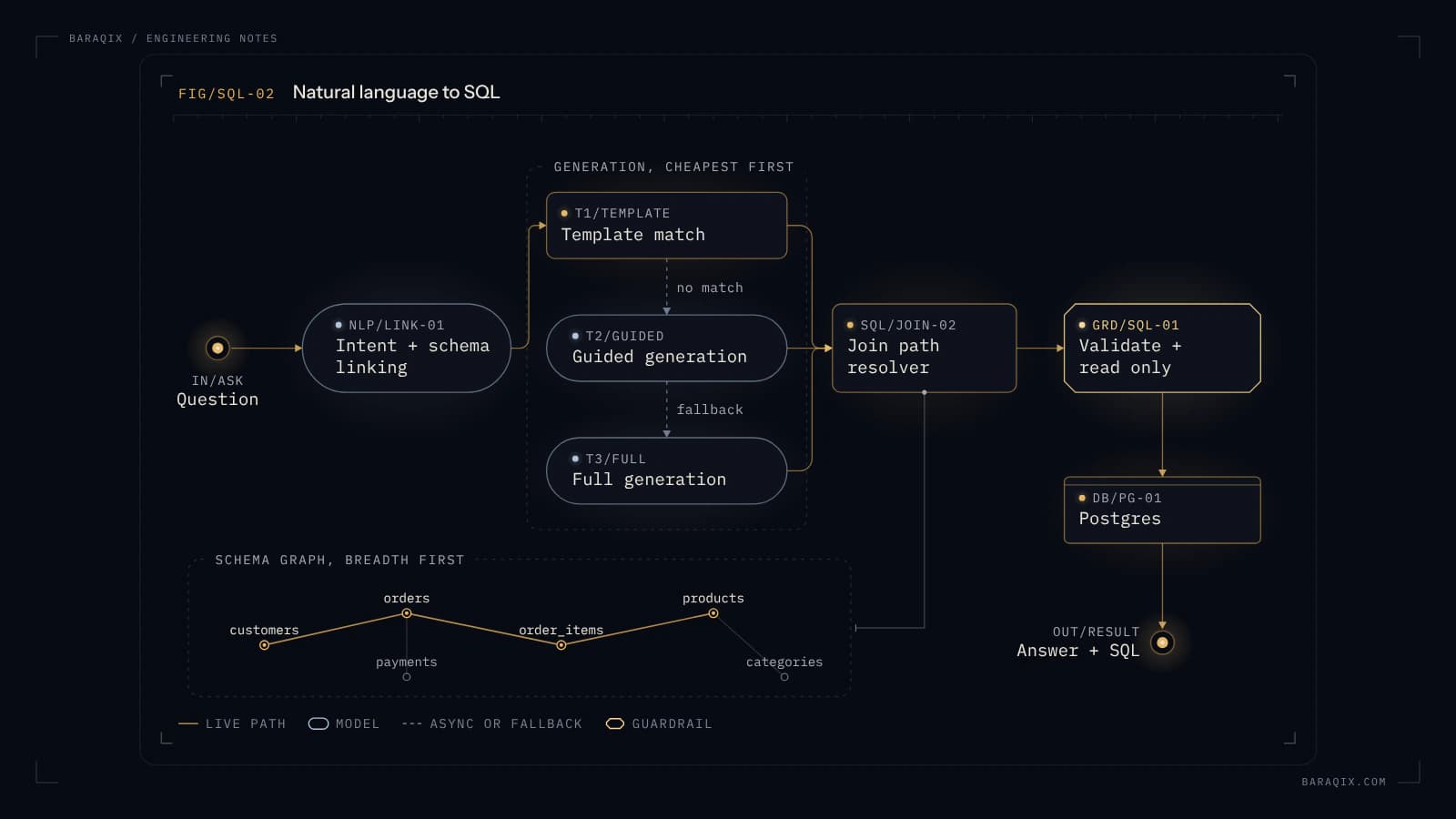
How NL2SQL resolves joins without guessing
How a breadth first search over the foreign key graph finds the join path in an NL2SQL system, so the model never writes a join condition. It covers the three tiers, ambiguous paths, read only access and when to ask the user.
data, build notes8 min read
New notes also go out by RSS, the moment they are published, and into the search index the moment they are published too.
Book a free call